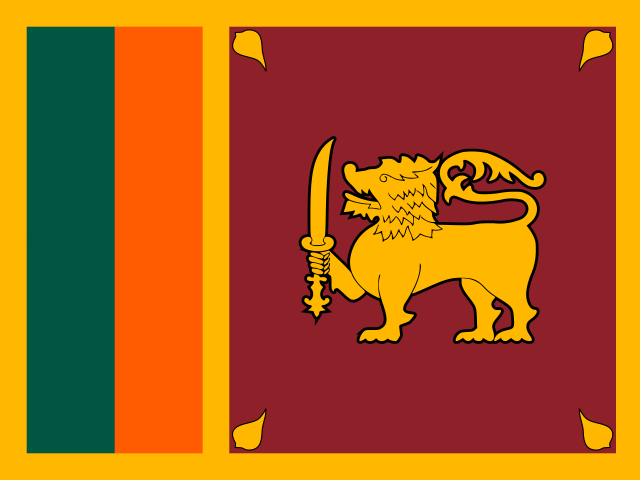
Flag of Sri Lanka
A maroon panel with a yellow lion holding an upright sword, and a yellow bo leaf in each of its corners. At the hoist are vertical green and orange stripes, and a yellow border runs around both parts.
What the flag means
The stripes added in 1951 stand for the Tamil (orange) and Muslim (green) communities. The bo leaves come from the tree of the Buddha's enlightenment and are read as the four Buddhist virtues of loving-kindness, compassion, sympathetic joy and equanimity.
History
The lion and sword come from the flag of Sri Vikrama Rajasinha, the last king of Kandy, which was taken to Britain in 1815. In 1948 Prime Minister D. S. Senanayake set up a committee chaired by S. W. R. D. Bandaranaike to settle the design, and the lion flag was flown at independence on 4 February 1948. Parliament adopted the committee's version, with two stripes, on 2 March 1951. When Ceylon became the Republic of Sri Lanka, the bo leaves were redrawn, and the new flag was first raised on 22 May 1972.
Earlier flags of Sri Lanka
- 1875–1948British Blue Ensign with the colonial badge of Ceylon
- 1948–1951Lion flag without the green and orange stripes
- 1951–1972Current layout with differently drawn corner leaves
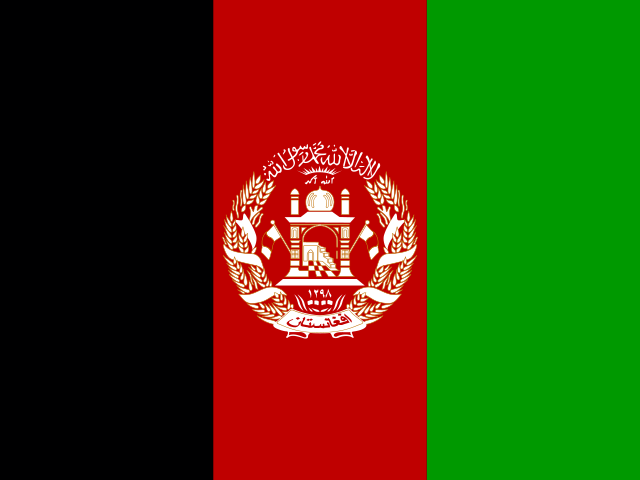
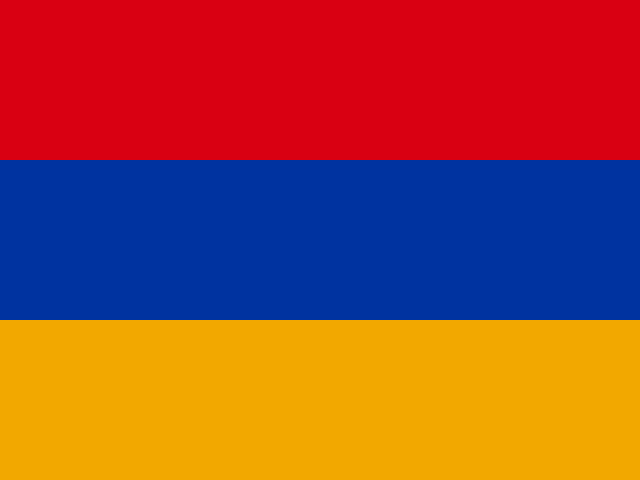
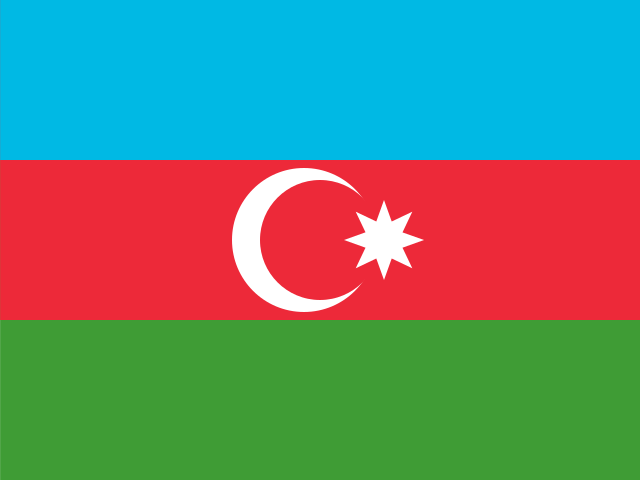
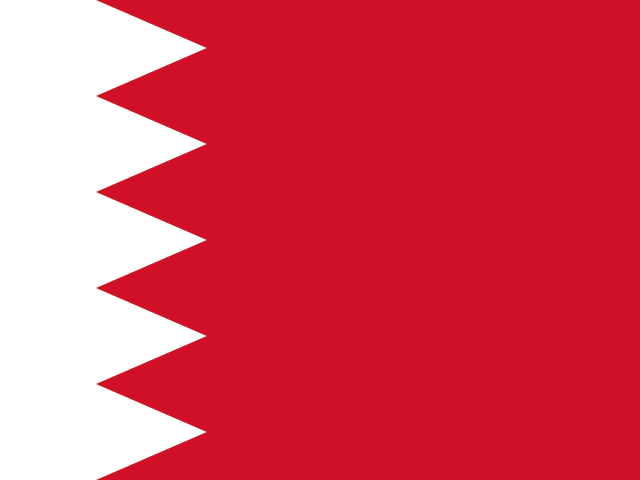
Flags of Sri Lanka's neighbours
Sources
- Wikipedia: Flag of Sri Lanka
- Flags of the World: Sri Lanka: history and meaning of the flag
- Flags of the World: Sri Lanka
Last reviewed 24 October 2026. Read how we research flags in our editorial policy, or report a mistake.