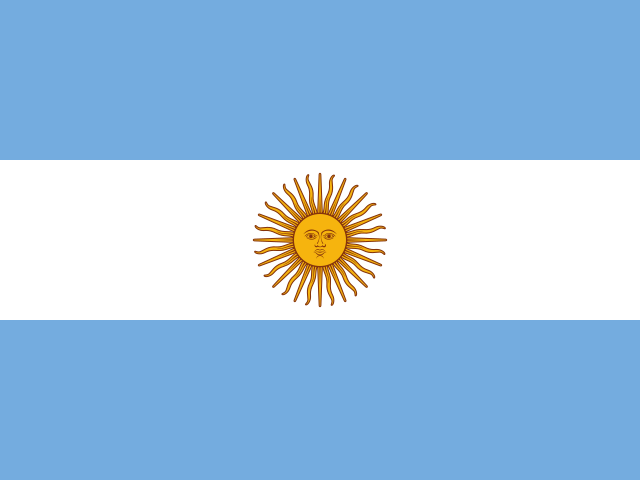
Flag of Argentina
Three equal horizontal bands of light blue, white and light blue. In the centre of the white band is the Sun of May, a golden sun with a face and 32 rays, alternately straight and wavy.
What the flag means
No law says what the colours mean. The popular explanation is that they stand for the sky and clouds, while another account links blue and white to the Spanish House of Bourbon. Decree 10,302 of 1944 requires the sun to match the one on Argentina's first coins of 1813.
History
Manuel Belgrano raised the first version at Rosario on 27 February 1812. The government in Buenos Aires ordered him to drop it, but the Congress of Tucumán accepted the colours as the national flag on 20 July 1816, and the sun was added in 1818. The sun version began as a war flag. Law 23,208 of 1985 gave every citizen the right to fly it, and Decree 1650/2010 made the IRAM technical standard, with its 5:8 ratio, official.
The privateer Hipólito Bouchard carried the flag on raids in the Pacific, and its blue and white later became the basis for the flag of the United Provinces of Central America.
Earlier flags of Argentina
- 1785–1816Spanish red and yellow flag of the colonial period
- 1816–1818Plain light blue, white and light blue bands without the sun
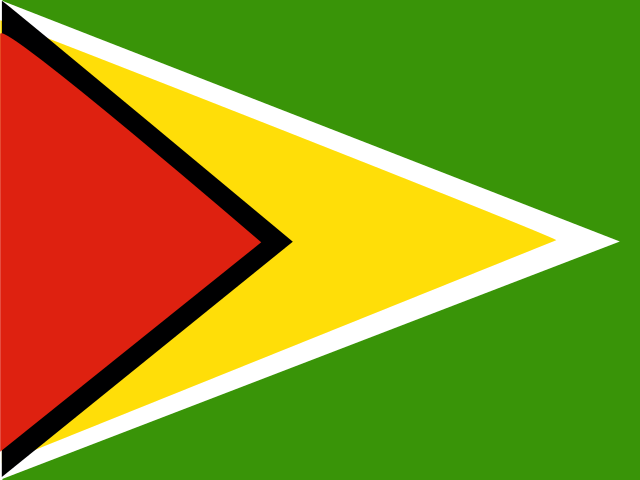
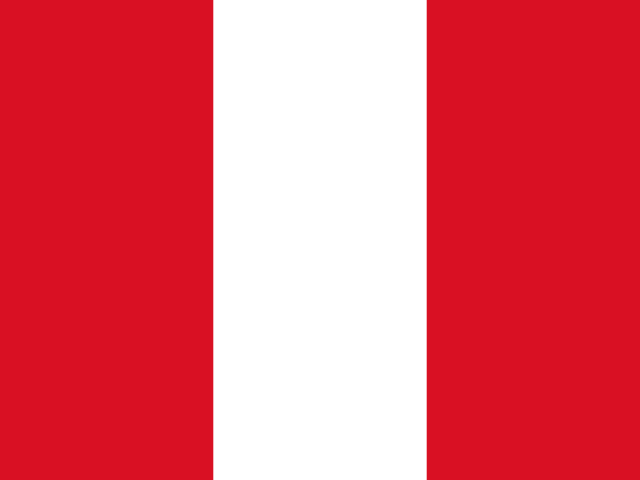
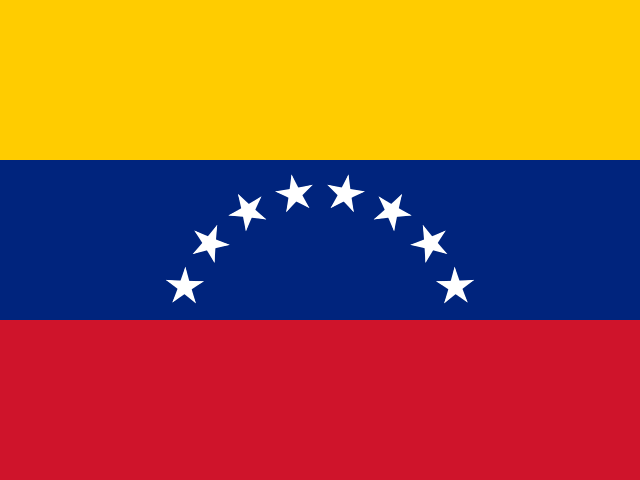
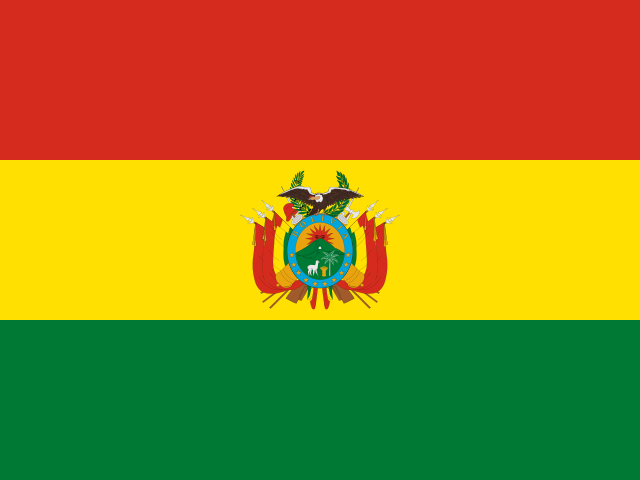
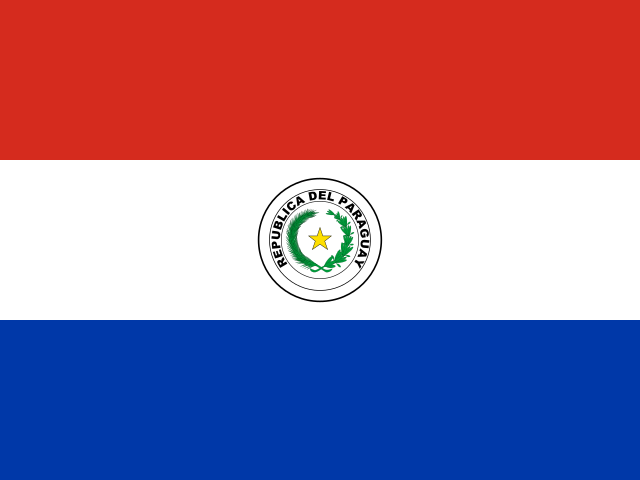
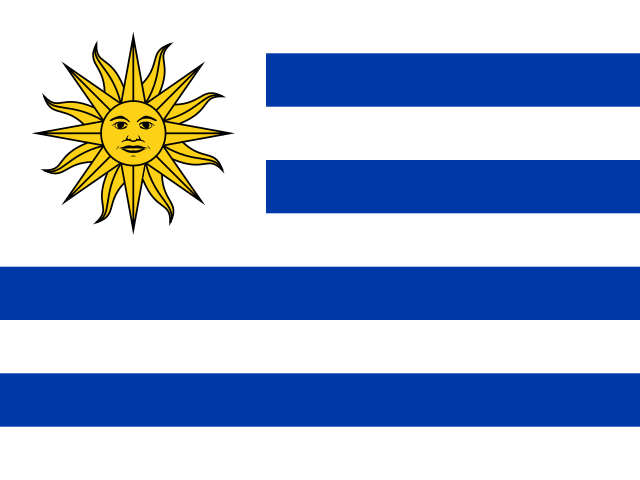
Flags of Argentina's neighbours


Sources
- Wikipedia: Flag of Argentina
- Flags of the World: Argentina
Last reviewed 24 October 2026. Read how we research flags in our editorial policy, or report a mistake.