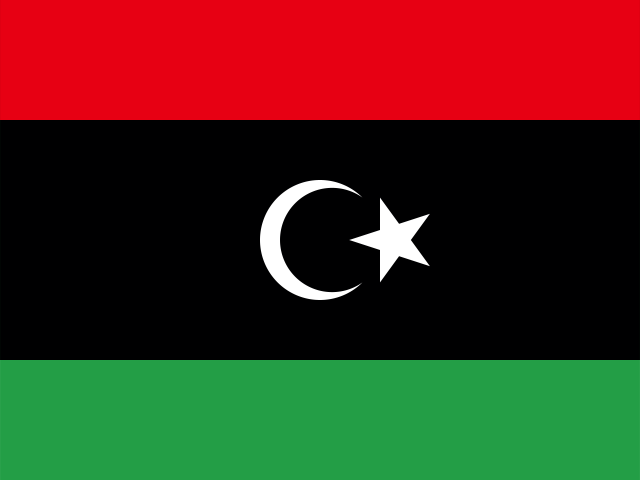
Flag of Libya
Three horizontal stripes of red, black and green, with the black stripe as wide as the other two together. A white crescent and five-pointed star are in the centre of the black stripe.
What the flag means
The 1951 constitution sets out the design. A booklet published that year by the Ministry of Information and Guidance links the crescent to the start of the lunar month and to the Hijra, and calls the star a sign of hope. The three colours match the regional flags of Fezzan (red), Cyrenaica (black) and Tripolitania (green).
History
UN commissioner Adrian Pelt wrote in his memoirs that Omar Faiek Shennib presented the design to the assembly drafting the constitution, which approved it. It became the flag of the Kingdom of Libya at independence on 24 December 1951 and was replaced in 1969. Protesters revived it during the 2011 uprising, and the National Transitional Council's Constitutional Declaration of August 2011 made it the national flag again.
From 1977 to 2011 Libya's plain green flag was the only national flag in a single colour with no emblem, apart from Afghanistan's white flag of 1996–1997.
Earlier flags of Libya
- 1969–1972Red, white and black horizontal tricolour of the Libyan Arab Republic
- 1972–1977Flag of the Federation of Arab Republics, with a golden hawk holding a scroll
- 1977–2011Plain green flag of the Jamahiriya under Muammar Gaddafi
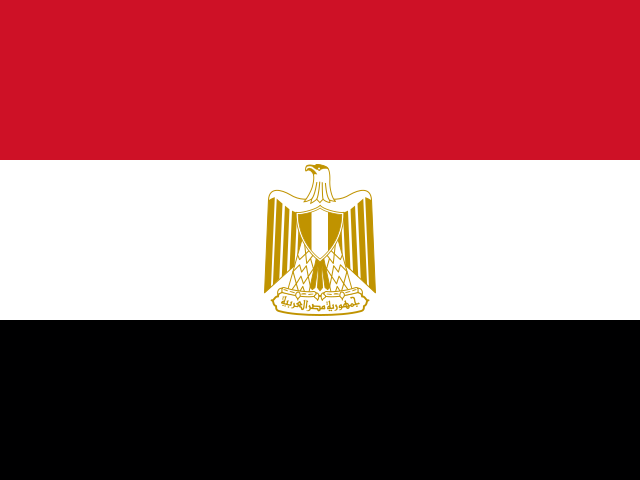
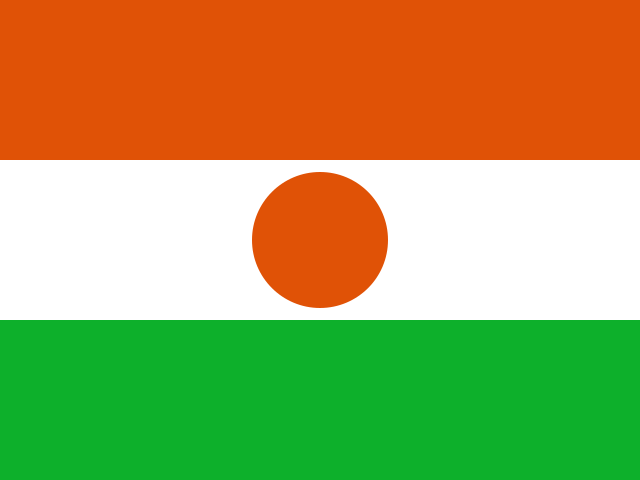
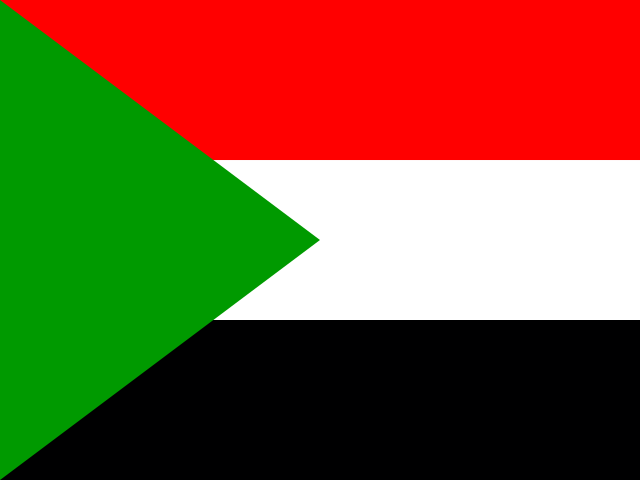
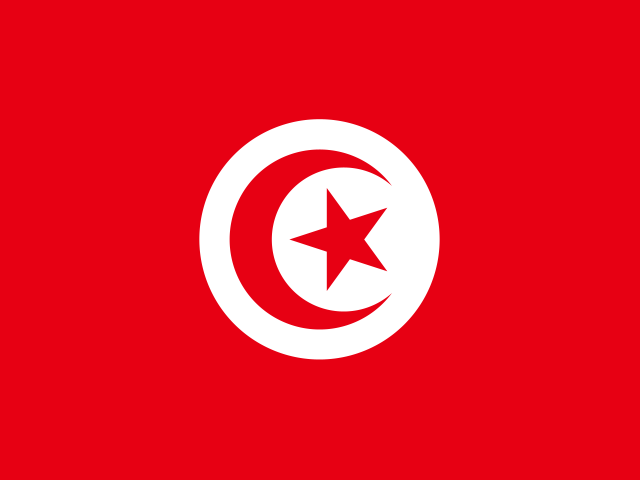
Flags of Libya's neighbours
Sources
- Wikipedia: Flag of Libya
- Flags of the World: Libya
Last reviewed 24 October 2026. Read how we research flags in our editorial policy, or report a mistake.