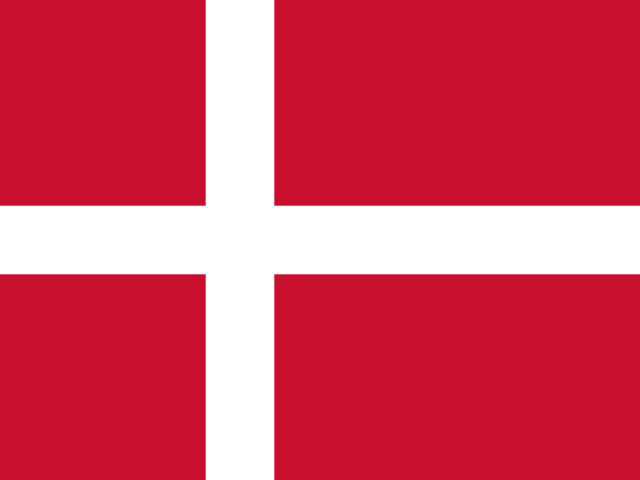
Flag of Denmark
A white cross on a red field. The vertical arm is set towards the hoist, so the cross is off-centre.
What the flag means
There is no official statement of what the flag means, but the cross is generally read as a Christian symbol. The Danish Ministry of Foreign Affairs translates the name Dannebrog as 'the cloth of the Danes'.
History
A white cross on red is documented as the banner of the Danish kings from the 14th century. The oldest undisputed colour picture of it is in the Gelre Armorial, made c. 1340–1370. According to legend, the flag fell from the sky during King Valdemar II's battle at Lyndanisse, in present-day Tallinn, on 15 June 1219; the earliest written versions of that story date from the 16th century. A regulation of 1748 set the proportions. Private citizens were barred from flying the flag in 1834 and allowed to from 1854.
Guinness World Records dates the Dannebrog's continuous use from 1625 and lists it as the oldest continuously used national flag.
Flags that look like this one
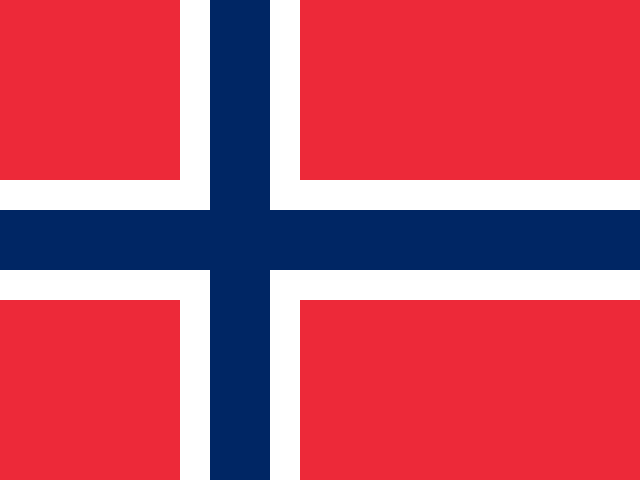
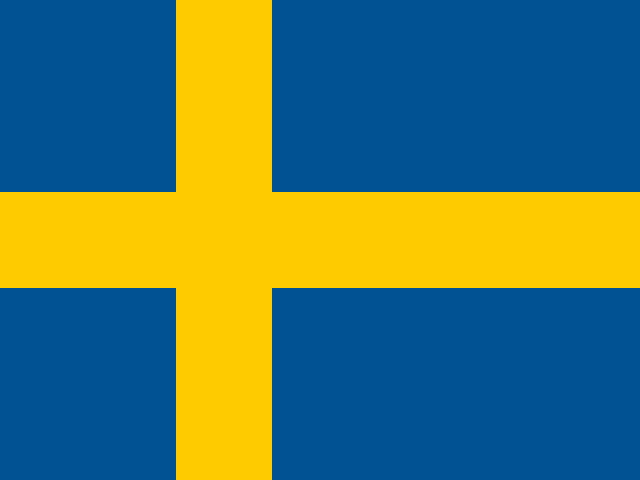
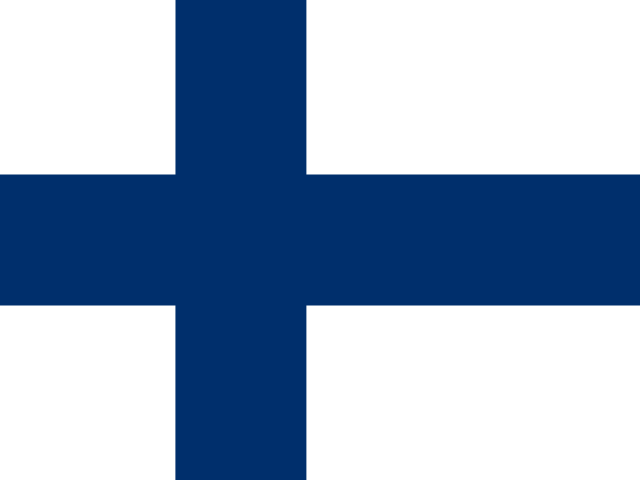
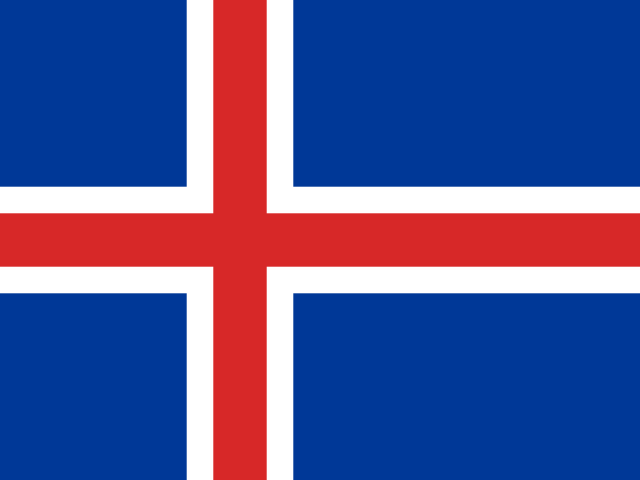
Denmark: white cross on red. Norway: blue cross with a white border on red. Iceland: red cross with a white border on blue. Sweden: yellow cross on blue. Finland: blue cross on white.
Flags of Denmark's neighbours
Sources
- Wikipedia: Flag of Denmark
- Ministry of Foreign Affairs of Denmark: Danish national flag
Last reviewed 24 October 2026. Read how we research flags in our editorial policy, or report a mistake.