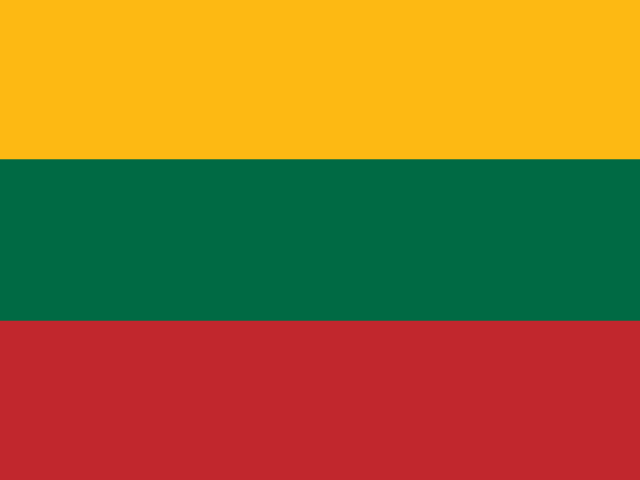
Flag of Lithuania
Three equal horizontal bands of yellow, green and red.
What the flag means
The Seimas, Lithuania's parliament, explains that green and red were chosen because they were common in national costume and sashes. Tadas Daugirdas proposed adding yellow as a symbol of the dawn and to make the flag livelier.
History
In 1917 Antanas Žmuidzinavičius made a green and red design for the Vilnius Conference, which delegates found too dark. A commission of Jonas Basanavičius, Žmuidzinavičius and Daugirdas approved the yellow, green and red tricolour in April 1918, and the Council of Lithuania adopted it as an interim flag. The Soviet authorities banned it in 1940. It was raised on the Gediminas Tower on 7 October 1988 and became the national flag again on 18 November 1988. A 2004 law changed the proportions from 1:2 to 3:5.
Earlier flags of Lithuania
- 1940–1953Red flag with a gold hammer and sickle
- 1953–1988Red flag with hammer, sickle and star, and white and green bands at the bottom
Flags that look like this one
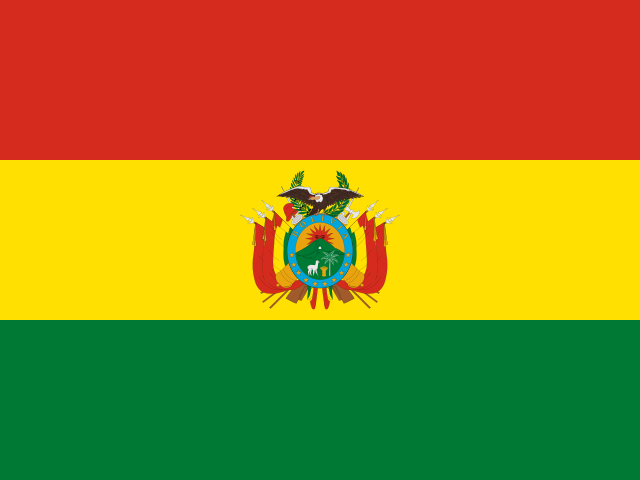
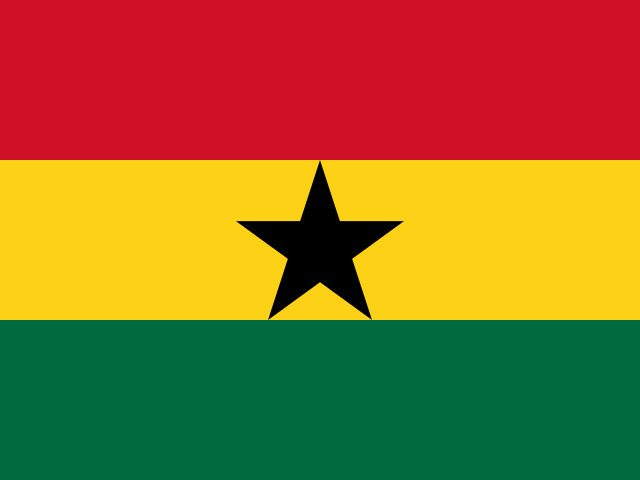
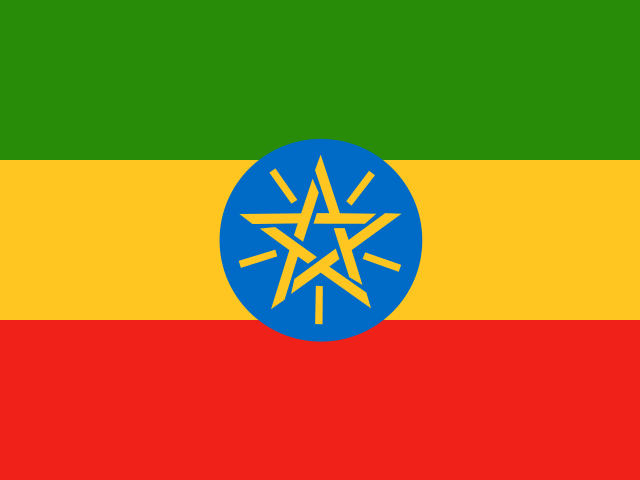
Bolivia is red, yellow, green. Ghana uses the same order with a black star. Lithuania is yellow, green, red. Ethiopia is green, yellow, red with a blue disc and star.
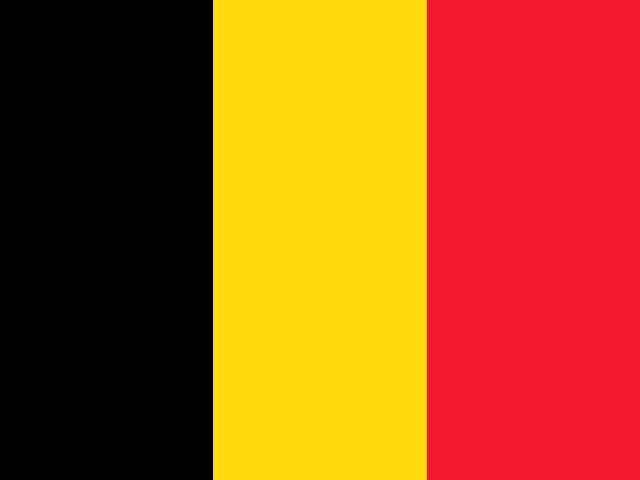
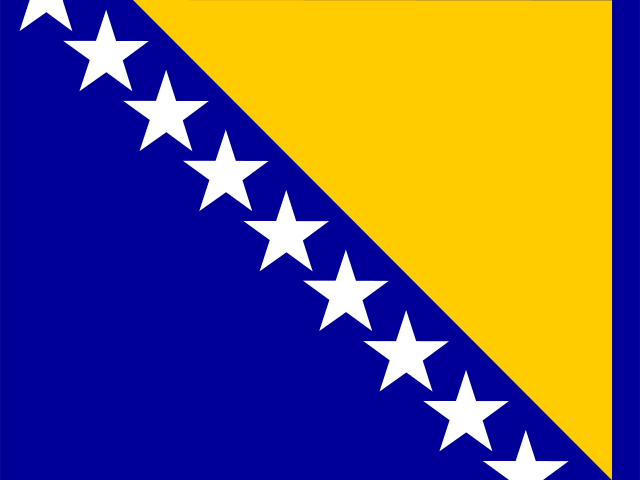
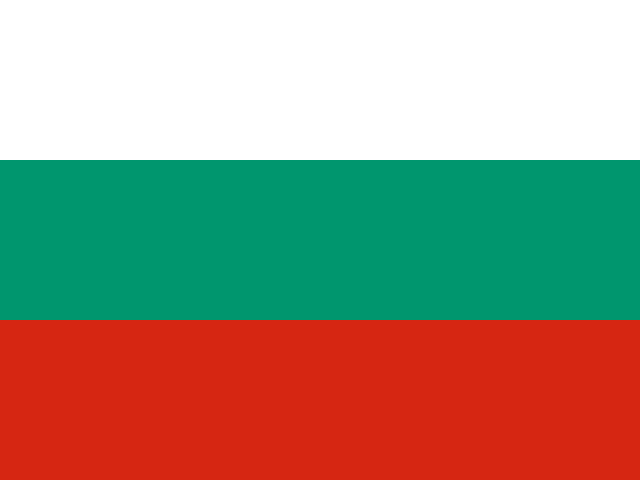
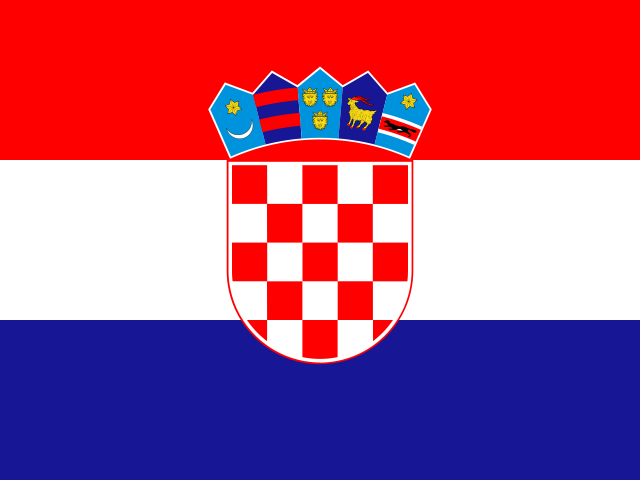
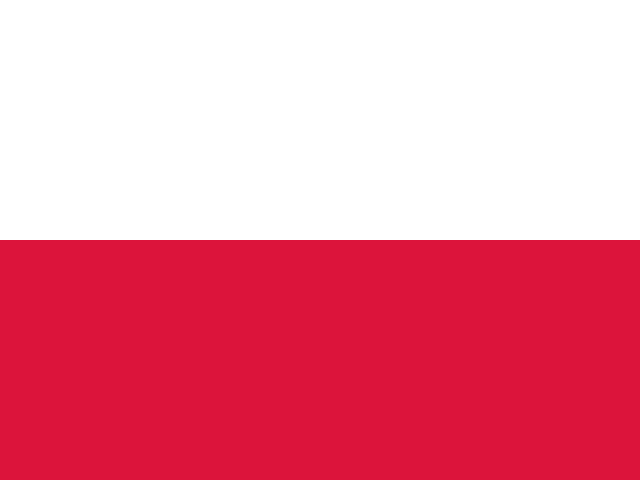
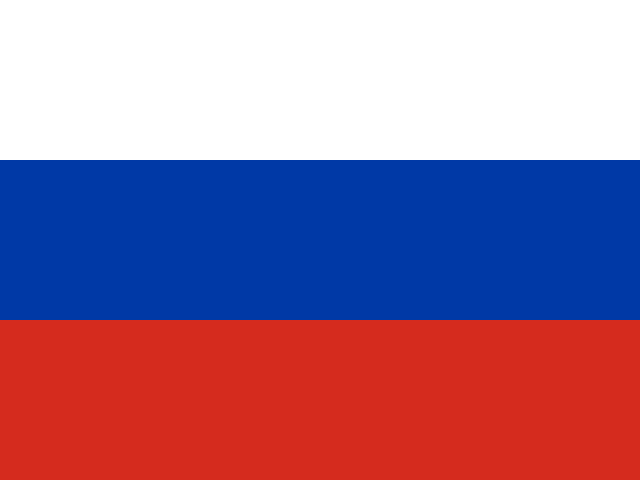
Flags of Lithuania's neighbours
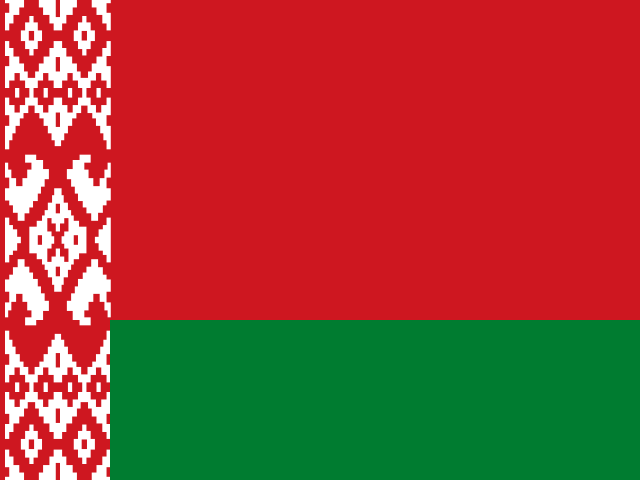
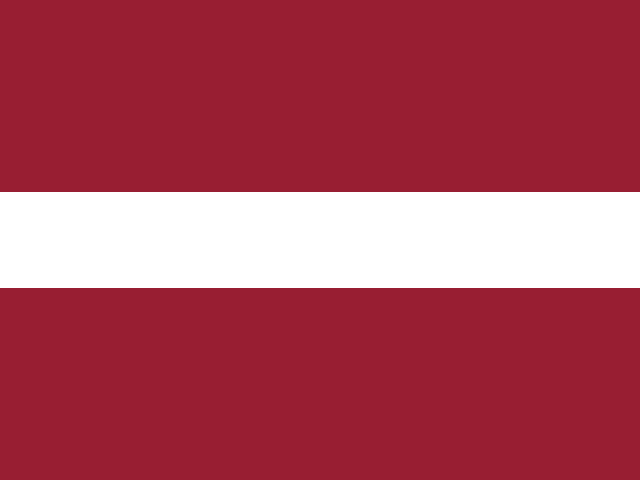
Sources
- Wikipedia: Flag of Lithuania
- Seimas of the Republic of Lithuania: History of the national flag of Lithuania
Last reviewed 24 October 2026. Read how we research flags in our editorial policy, or report a mistake.