Flag of Cuba
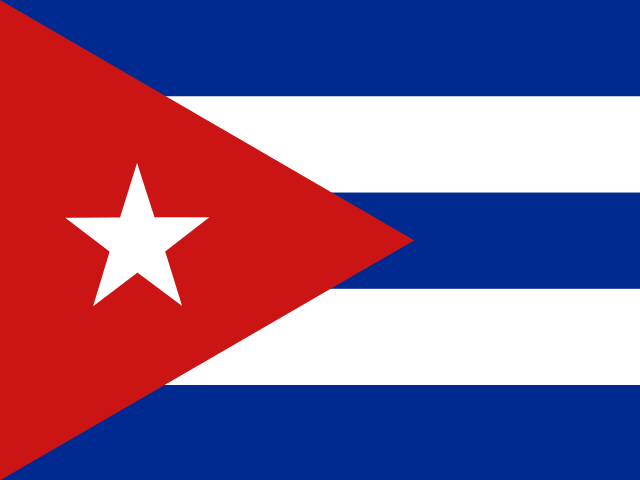
Five horizontal stripes, three dark blue and two white, with a red equilateral triangle at the hoist containing a white five-pointed star.
What the flag means
The Cuban presidency explains the design this way: the red triangle is the blood shed by Cubans, the three blue stripes are the country's three regions, and the white stripes are the purity of its ideals. The flag is known as the Lone Star flag.
History
Narciso López and the poet Miguel Teurbe Tolón designed the flag in New York in 1849. López's expedition first raised it at Cárdenas on 19 May 1850. The independence assembly at Guáimaro adopted it as the national flag on 11 April 1869, and Máximo Gómez raised it over Havana's Morro castle on 20 May 1902, when the republic began. A 1906 decree changed the stripes from sky blue to dark blue.
The Cuban flag was the model for the flag of Puerto Rico, adopted in 1895 by a pro-independence group.
Earlier flags of Cuba
- 1843–1898Flag of Spain, during Spanish colonial rule
- 1899–1902Flag of the United States, during the US military occupation
- 1902–1906Same design with lighter, sky-blue stripes
Flags that look like this one
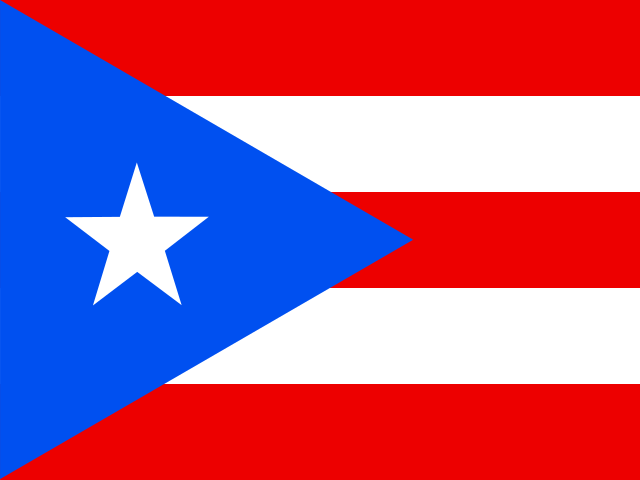
Mirror images. Cuba has blue stripes and a red triangle; Puerto Rico has red stripes and a blue triangle.
Sources
- Wikipedia: Flag of Cuba
- Presidencia de la República de Cuba: Cuba
Last reviewed 24 October 2026. Read how we research flags in our editorial policy, or report a mistake.