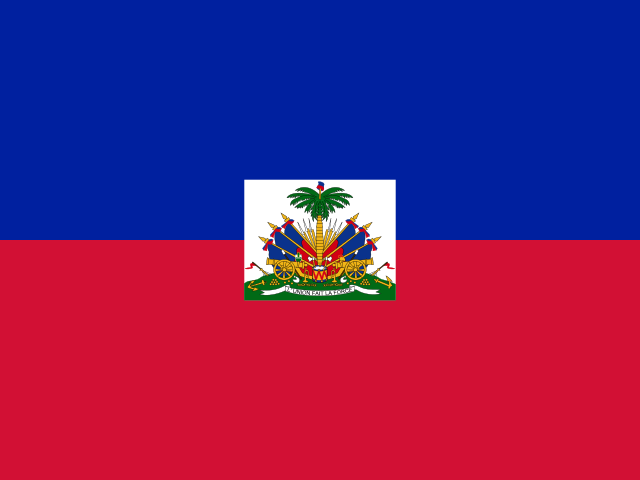
Flag of Haiti
Two equal horizontal bands, blue over red, with a white rectangle in the centre holding the coat of arms: a royal palm topped by a cap of liberty, above a trophy of weapons and the motto 'L'Union fait la Force'.
What the flag means
Article 2 of the constitution makes blue and red the national colours but gives them no meaning. In the Haitian story of the flag's origin, blue stands for Black Haitians and red for people of mixed race. The motto on the arms means 'In union there is strength'.
History
Haitian tradition holds that Jean-Jacques Dessalines tore the white band from a French tricolour at the Congress of Arcahaie on 18 May 1803 and that his goddaughter Catherine Flon sewed the blue and red together. Dessalines switched to black and red in 1805. Alexandre Pétion's republic went back to blue and red, turned the bands horizontal and later added the arms. The Duvaliers used black and red from 1964 to 1986.
18 May, the date given for the Arcahaie story, is celebrated in Haiti as Flag and Universities Day.
Earlier flags of Haiti
- 1803–1804Vertical blue and red bicolour, the French tricolour without its white band
- 1805–1806Black and red bicolour of Dessalines's empire
- 1964–1986Black and red bicolour with the coat of arms, used under the Duvaliers
Flags that look like this one
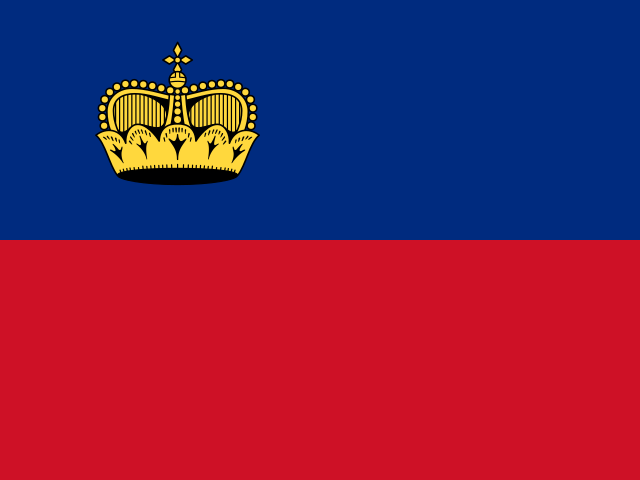
Blue over red. Haiti has its coat of arms on a white panel in the centre; Liechtenstein has a gold crown near the flagpole.
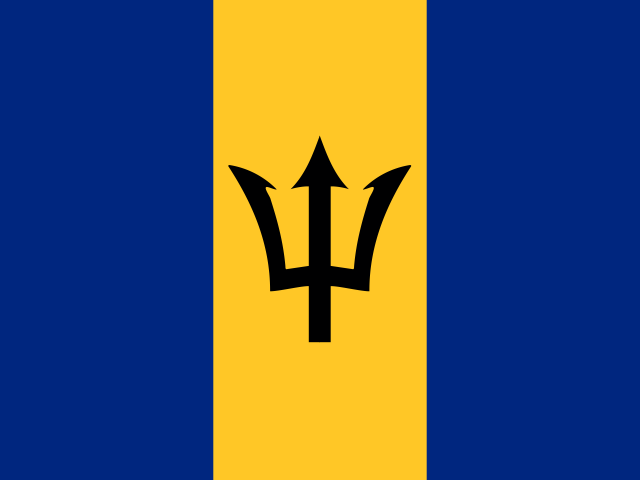
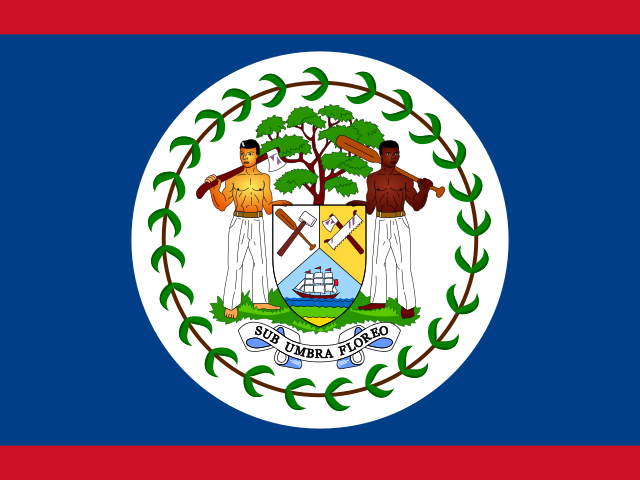
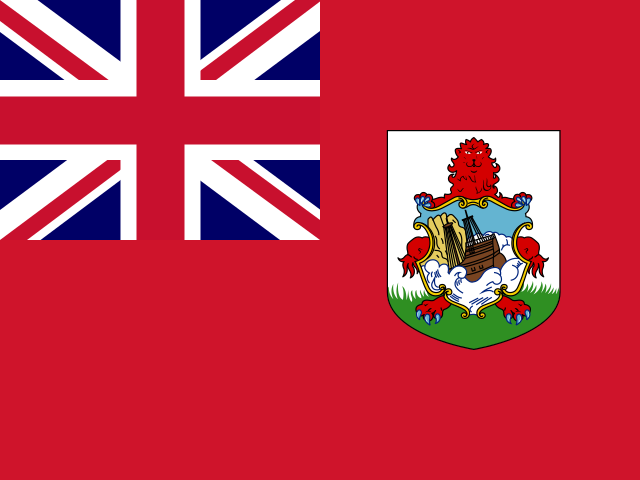
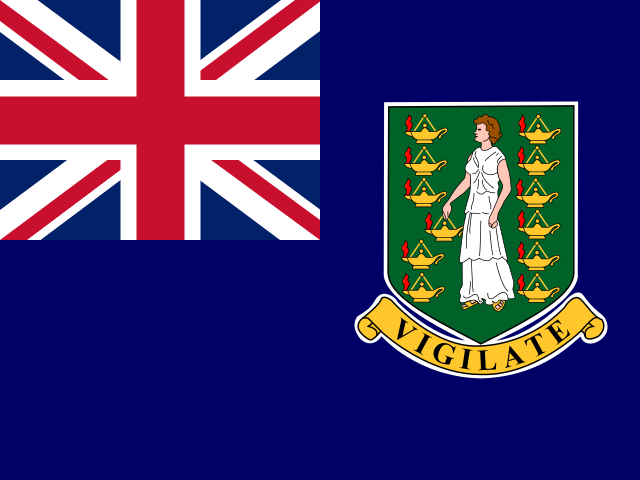
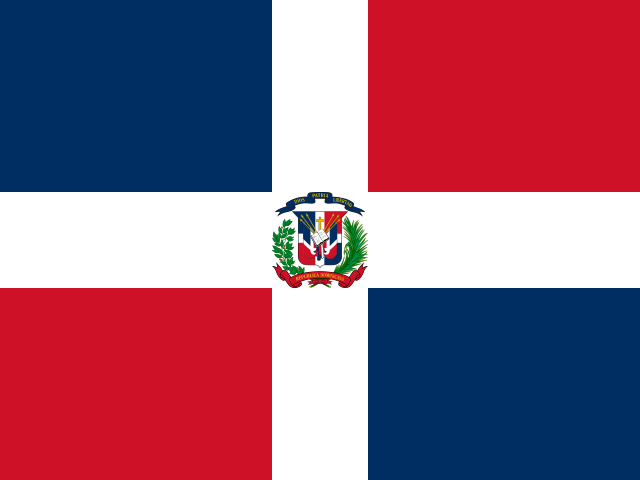
Flags of Haiti's neighbours
Sources
- Wikipedia: Flag of Haiti
- Constitute Project: Haiti 1987 (rev. 2012)
Last reviewed 24 October 2026. Read how we research flags in our editorial policy, or report a mistake.