Flag of Mexico
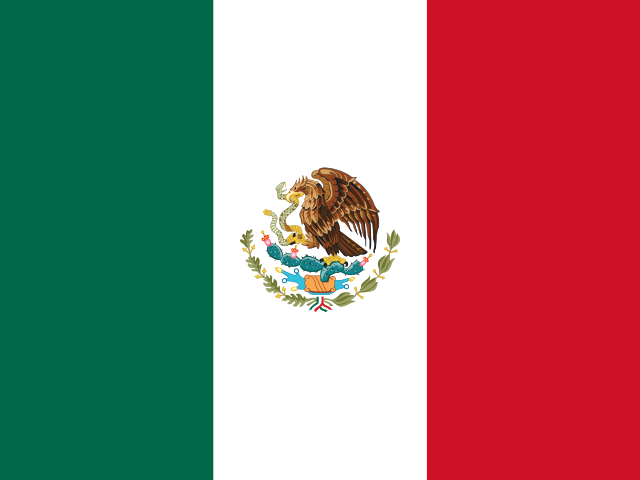
Three equal vertical bands of green, white and red, with the national coat of arms in the centre of the white band: a golden eagle on a prickly pear cactus, eating a snake.
What the flag means
Mexican law gives the colours no official meaning. Under Agustín de Iturbide in 1821, white stood for the Catholic religion, green for independence and red for union between Mexicans and Spaniards. From Benito Juárez's time they were read as hope, unity and the blood of national heroes. The eagle recalls the Aztec sign for where to found Tenochtitlan.
History
The green, white and red go back to Iturbide's Trigarante flag of 1821. Venustiano Carranza's 1916 decree turned the eagle to side profile, and the current version of the arms, by Francisco Eppens Helguera, came into use in 1968, the year Mexico City hosted the Olympic Games. The Law on the National Arms, Flag and Anthem, in force since 24 February 1984, sets the design and the 4:7 proportion.
Without the coat of arms the flag would look almost the same as Italy's, so Mexico dropped its plain tricolour merchant ensign. The proportions also differ: 4:7 for Mexico, 2:3 for Italy.
Earlier flags of Mexico
- 1821–1823Vertical tricolour with a crowned eagle, flag of the First Mexican Empire
- 1823–1864Vertical tricolour with an uncrowned eagle holding a snake
- 1916–1968Vertical tricolour with the side-profile eagle of Carranza's 1916 decree
Flags that look like this one
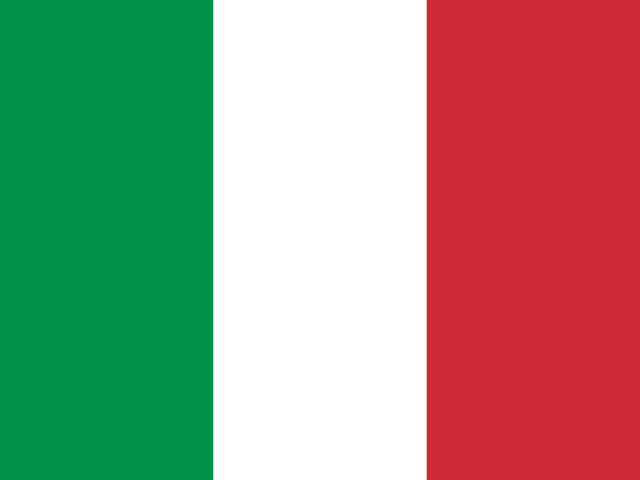
Green, white and red vertical stripes. Mexico adds its eagle-and-snake coat of arms, and its flag is longer.
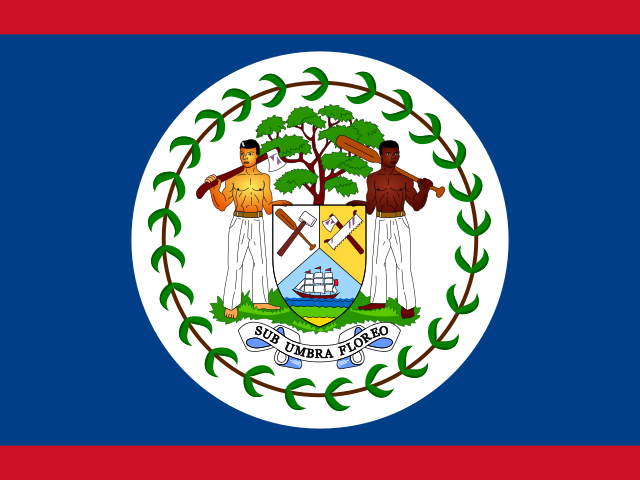
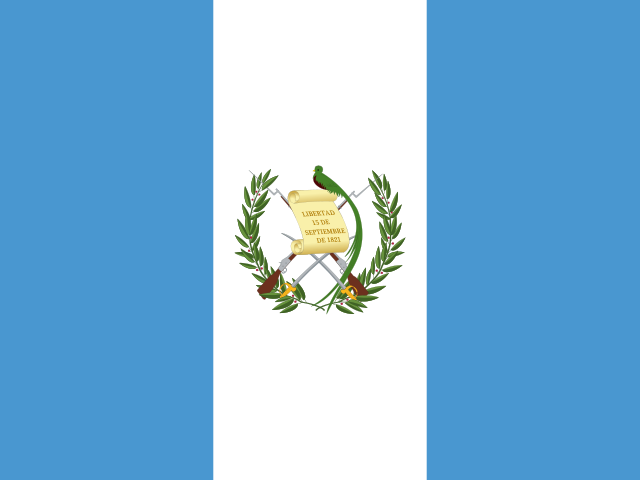
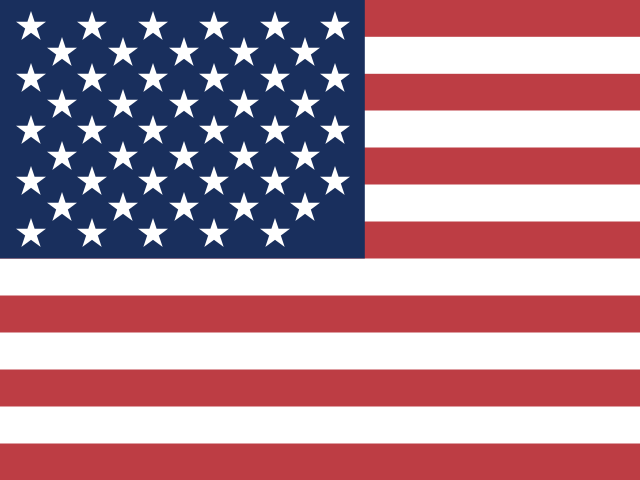
Flags of Mexico's neighbours
Sources
- Wikipedia: Flag of Mexico
- Gobierno de México (INAFED): Día de la Bandera de México
Last reviewed 24 October 2026. Read how we research flags in our editorial policy, or report a mistake.