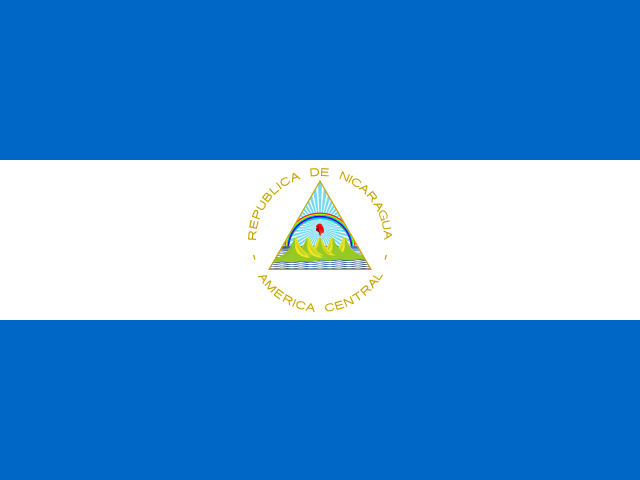
Flag of Nicaragua
Three equal horizontal bands of blue, white and blue, with the coat of arms in the centre: a triangle holding five volcanoes between two seas, a rainbow and a cap of liberty, inside the words 'República de Nicaragua, América Central'.
What the flag means
According to the National Assembly, blue means justice and loyalty and white means purity and integrity. On the arms, the triangle stands for equality, the five volcanoes for the five Central American republics, the rainbow for peace and the cap for liberty.
History
The Federal Republic of Central America adopted a blue and white flag on 21 August 1823, and Nicaragua kept it after the federation broke up, until 1854. Other designs followed, among them a yellow, white and scarlet tricolour. In September 1908 the government went back to the federation's emblems, linked to hopes of reuniting the five states. Legislative Decree 1908 of August 1971 is the law that now defines the flag.
The rainbow on the coat of arms makes Nicaragua's one of the few national flags that include purple.
Earlier flags of Nicaragua
- 1838–1854Blue and white flag of the former Central American federation
- 1854–1856Yellow, white and scarlet tricolour
- 1908–1971Earlier version of the current design, before the 1971 law
Flags that look like this one
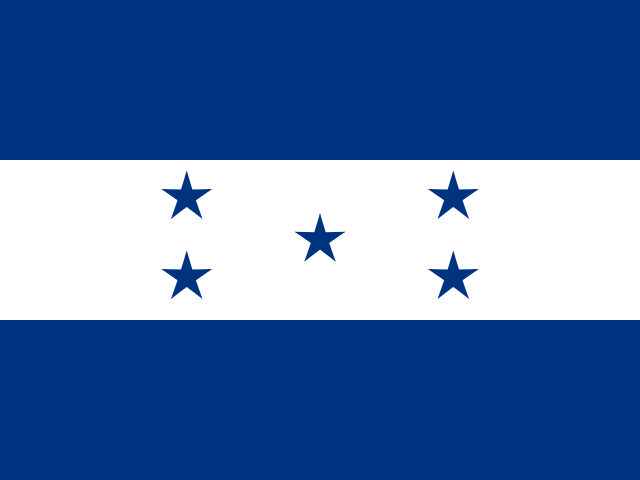
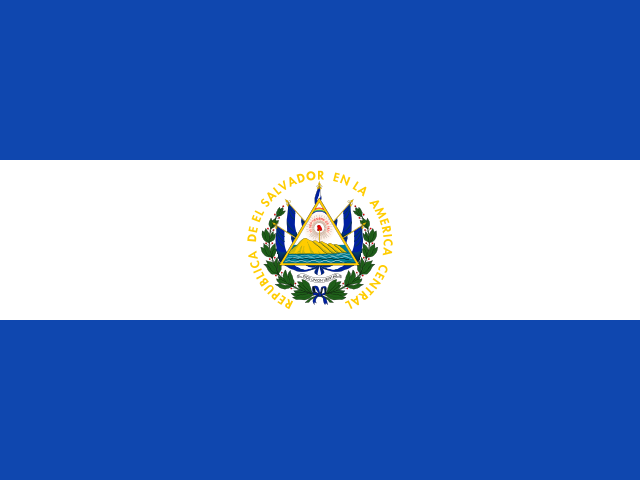
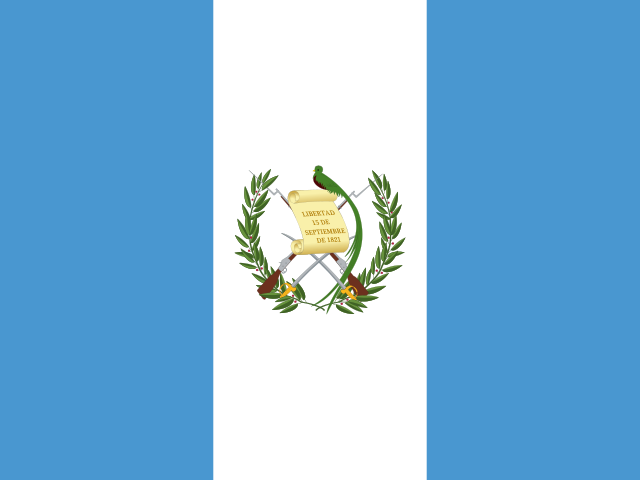
Blue, white, blue from the old Central American federation. Honduras has five blue stars. Nicaragua and El Salvador have different coats of arms in the centre. Guatemala's stripes are vertical and light blue.
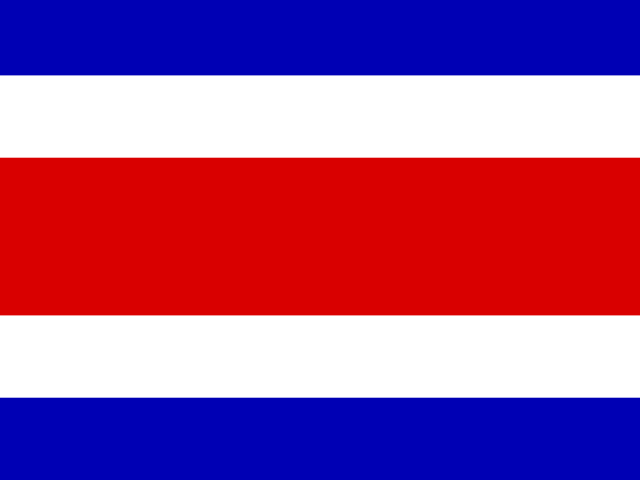
Flags of Nicaragua's neighbours
Sources
- Wikipedia: Flag of Nicaragua
- Asamblea Nacional de Nicaragua: Símbolos Patrios
Last reviewed 24 October 2026. Read how we research flags in our editorial policy, or report a mistake.